


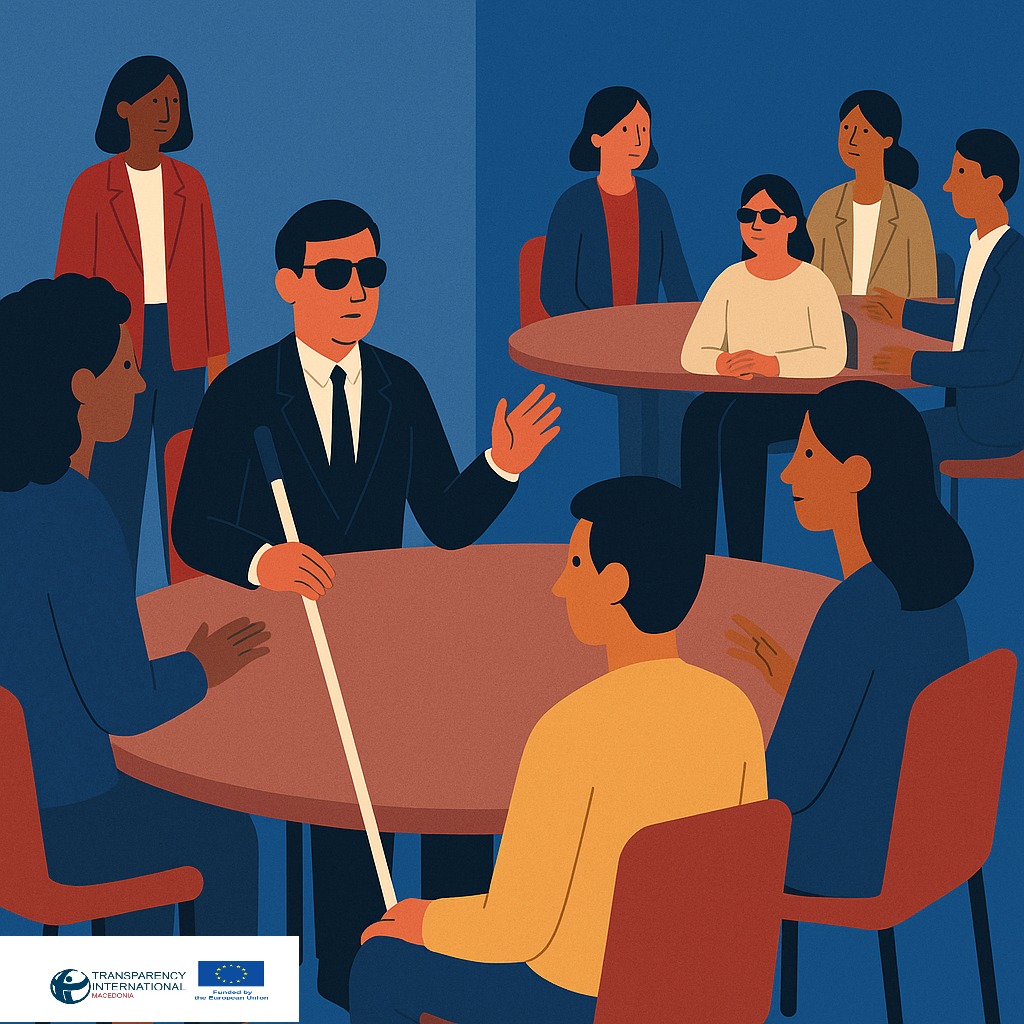
The sub-grant: “Invisible Citizens: Promoting Political Integrity and Transparency for the Visually Impaired” was part of the project “Integrity Watch in the Western Balkans and Turkey: Civil Society Organizations in the Fight Against Corruption Using Political Integrity Data”, implemented by Transparency International-Macedonia and supported by the European Union. This sub-grant was implemented by Association for European Social Inclusion “ESI NELIS”. This project investigated how political integrity mechanisms such as political legislative processes, and public decision making often overlook the needs of blind and visually impaired people in North Macedonia. Using open data and evidence based analysis, the project documented accessibility gaps and advocated for systemic improvements.
The implementation process began with preparatory and coordination activities, including communication with participants, volunteers, institutional representatives, and media partners. Particular attention was dedicated to accessibility preparation, including adapting communication materials into accessible formats and ensuring that all planned activities could be fully attended and followed by visually impaired participants.
One of the first major activities implemented was an educational and practical training workshop for visually impaired participants and volunteers. The workshop focused on increasing political literacy, understanding democratic processes, identifying misinformation and manipulative political content, and improving access to publicly available political information through accessible digital tools. Participants were introduced to screen-reader-friendly platforms, accessible communication tools, and methods for independently accessing and evaluating political content online.
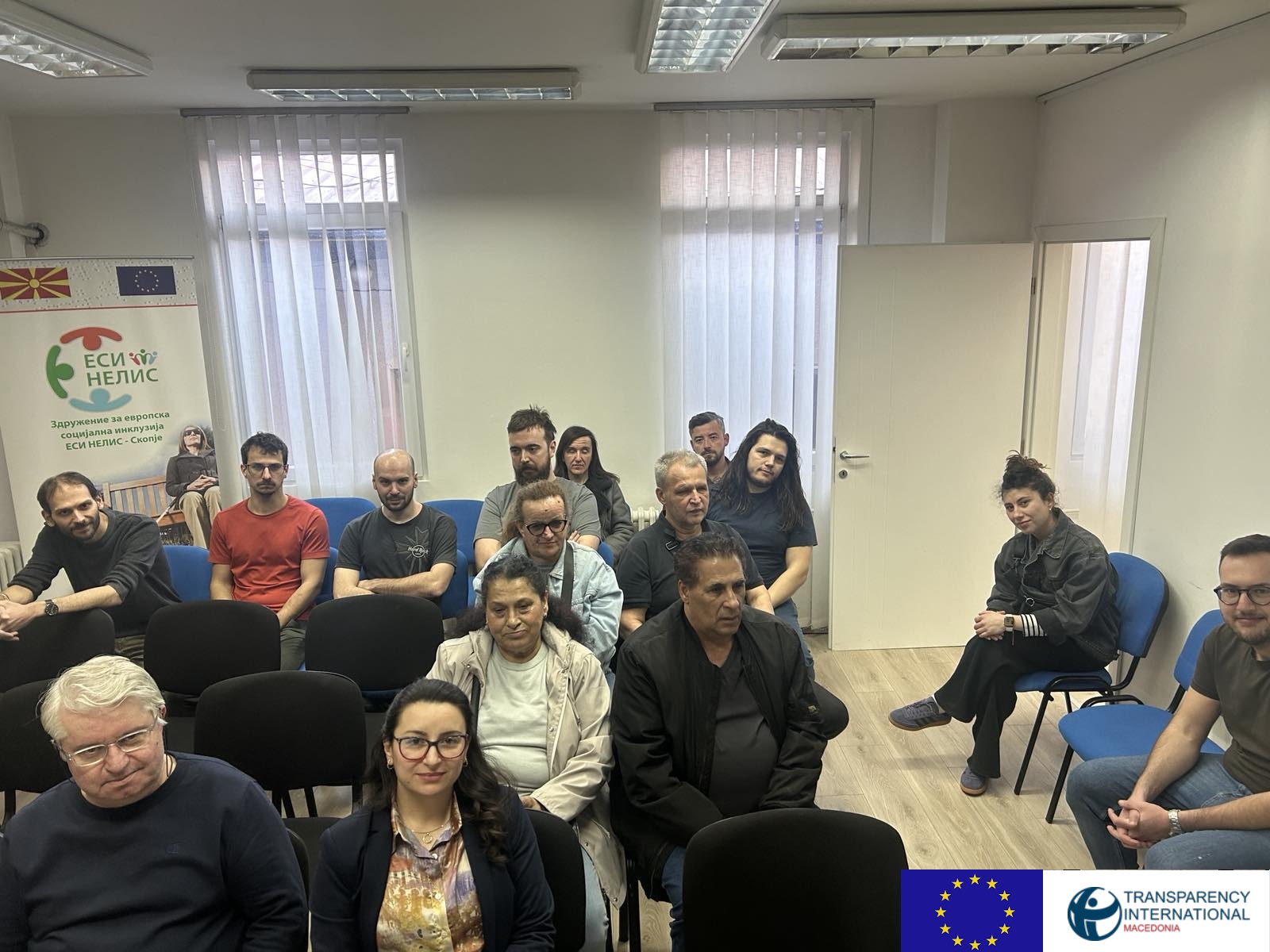
Following the workshop activities, a series of public discussions and meetings were organized with the aim of promoting inclusive dialogue between visually impaired individuals, institutional representatives, civil society organizations, and members of the wider community. These events focused on accessibility in public communication, equal participation in democratic processes, and the importance of ensuring that political information is available in accessible formats.
The public meetings created opportunities for direct engagement between participants and decision-makers. Representatives from institutions and community organizations participated in discussions regarding existing accessibility challenges and possible improvements in communication practices and civic inclusion. These activities also helped raise public awareness regarding the everyday barriers faced by visually impaired citizens when attempting to access political information and public services.
As part of the project implementation, a final public dialogue event was organized where the project findings, participant experiences, observations, and recommendations were publicly presented and discussed. The final dialogue served as a platform for summarizing the project results and encouraging continued cooperation among institutions, civil society actors, and visually impaired individuals in future accessibility initiatives.
An important component of the project implementation was the production and dissemination of media content through ESI Radio and online communication platforms. Several radio and video programs were recorded and published focusing on political integrity, accessibility, inclusion, and civic participation of visually impaired individuals. The media content included discussions, interviews, participant perspectives, and awareness-raising messages intended to reach a broader audience beyond the direct project participants.
Social media communication and online visibility activities were continuously carried out throughout the reporting period. Information about project events, activities, discussions, and media content was regularly shared through online channels in order to ensure transparency, public engagement, and broader visibility of the project objectives and outcomes.
Throughout all activities, special emphasis was placed on ensuring accessibility, inclusion, active participation, and equal engagement opportunities for visually impaired participants. The activities were implemented successfully and contributed to strengthening awareness, dialogue, and civic participation regarding political transparency and accessibility issues.

